

New York City restaurants are running out of ways to outrun inflation.
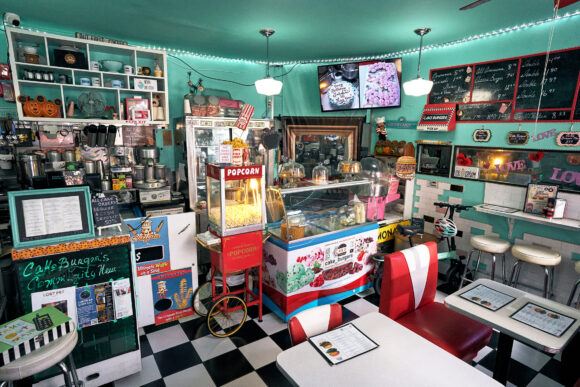
CakeBurgers, an East Harlem eatery that serves hamburgers and cakes shaped like hamburgers, turned off its air conditioning — even as temperatures in the city this summer routinely soared into the 90s — after the gas and electric bill spiked to $1,400 a month.
Frank Scotto, who owns several neighborhood bars between Chinatown and Midtown, saw his liability insurance premiums surge fivefold in four years at one of his establishments, to an annual $24,000. For years, Scotto prided himself on low prices and resisted raising them in spite of increasing costs. After the holiday season, he plans to boost alcohol prices by up to 15%, or by about $1 for a can of beer, as he looks to make up the difference.
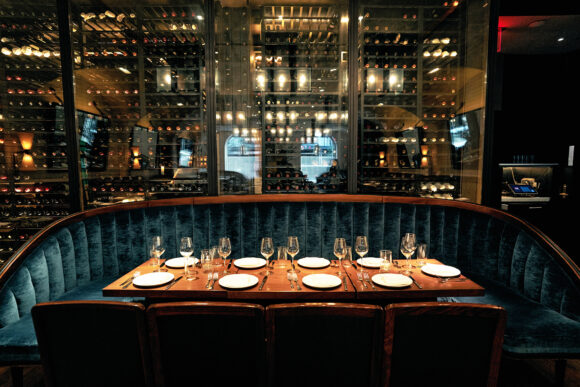
Even higher-end restaurants where sales remain strong are battling to keep their footing. Scarpetta owner John Meadow closes some of his other establishments on Sundays to keep a lid on expenses, as soaring wages and insurance premiums pressure his margins.
The pressure on those businesses is part of the broader affordability crisis squeezing US companies and households and upending the midterm elections. And while the war in Iran and President Donald Trump’s tariffs have pushed up prices for fuel and other goods, those aren’t the only pain points.
For small and medium-sized enterprises across New York City, escalating insurance premiums, interest rates and wages are slicing into the bottom line. Recent increases in energy and health-coverage costs and city business taxes have outpaced national trends, according to an August report from New York State Comptroller Thomas DiNapoli.
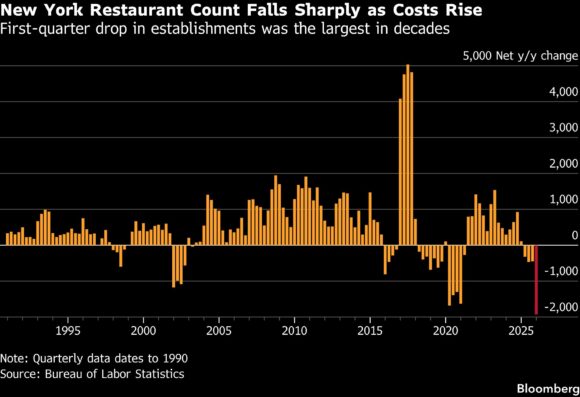
That relentless rising tide has forced some bars and restaurants to stretch to keep their doors open, while new spots have strained to get off the ground. In the first quarter of 2026, New York state saw the biggest net year-over-year decline in eating and drinking places in at least 36 years of Bureau of Labor Statistics data, surpassing even the steepest drop during the Covid-19 pandemic. Many eateries are focused not on how they can grow, but how they can survive.
“Whenever we talk to our members about this issue or the industry in general, they come back with death by a thousand cuts,” said Melissa Fleischut, chief executive officer of the New York State Restaurant Association. “The idea that they’re looking three years down the road, five years down the road, has just been thrown out the window. They’re looking into maybe, if I’m lucky, three weeks down the road.”
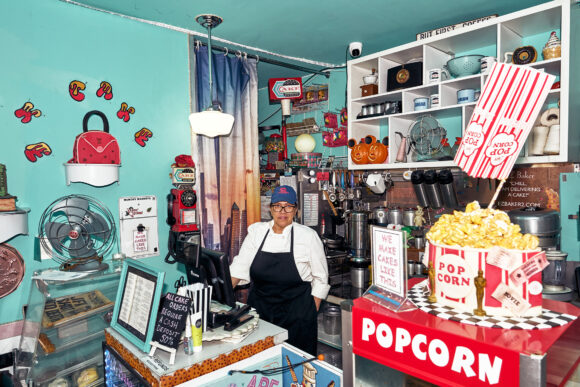
For Evette Zayas, who owns CakeBurgers with her husband, the math is unforgiving. She hasn’t paid herself a salary since the Covid-19 pandemic, and eats most of her meals at her own establishment.
“Every penny counts, forget about dollars,” she said. “I own a restaurant, so I eat burgers.”
Cost Creep
Angst over the rising cost of living has turned into a political liability for Trump, who returned to office promising to tame inflation. Six in 10 Americans said this summer that his economic policies have made conditions worse, according to Pew Research Center.
But many of the higher costs New York businesses are dealing with have been increasing for some time. The Manhattan Chamber of Commerce found employee health-insurance costs rose 12.9% last year for New York-area service firms, while utility costs rose 8.5%, business insurance rose 7% and wages and salaries went up 3.4%. The chamber estimated that tariffs are costing metropolitan-area small businesses $4.5 billion a year.
“We’ve come to the point where the duration of inflation and the elevated costs associated with tariffs mean that raising prices is a sound business decision,” said Jessica Walker, president of the Manhattan Chamber of Commerce.
Some smaller companies are doing what they can to pare their bills. At CakeBurgers, Zayas consolidates food into fewer refrigerators overnight to save on power. Yet ground beef that cost roughly $3.40 a pound earlier this year has climbed to as much as $5. And delivery apps take as much as 30% in fees from her orders, Zayas said. There’s only so much belt-tightening can help.
Other restaurant owners said an increase in enforcement and regulation is also costing them money. Scotto said he’s seen more “nuisance tickets, fees and fines” since the pandemic. He was recently given a $6,000 ticket for an oversized awning he hopes he can get reduced to $1,200.
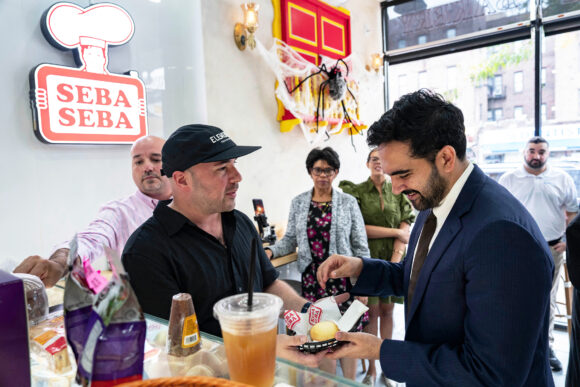
A spokesperson for Mayor Zohran Mamdani said that his administration is working to reduce fines, fees and paperwork for small businesses, including by establishing a “Mom and Pop Czar” to address the concerns of those with fewer than 10 employees.
Meadow, the founder and president of LDV Hospitality, which owns roughly 20 establishments, including Scarpetta, said “the cost of doing business has never been more severe.”
Building a restaurant that once cost about $700 a square foot now costs at least $1,000, he said, with outlays for materials, bureaucratic hurdles and labor skyrocketing. A project at John F. Kennedy International Airport ended up costing about $3,000 a square foot, in large part because of labor costs, he said. Still, Meadow said he is moving ahead with plans to open as many as seven new restaurants over the next year.
At some of his existing restaurants, Meadow has eliminated slow shifts, including some brunches, which has allowed him to reduce payroll when demand is lowest. His hotel restaurants have better economies of scale because several outlets can share staff.
Tolls & Fees
The strain extends beyond restaurants. New York City lost a net 4,300 businesses last year, the biggest decline since the Covid-fueled closures of 2020, according to the city’s Economic Development Corporation.
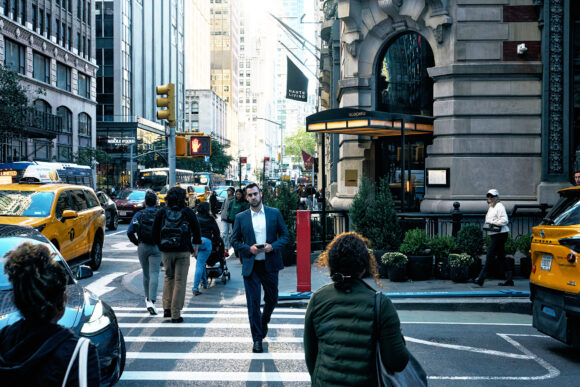
At Carmel Car & Limousine Service, Chief Executive Officer Avik Kabessa said fuel, labor, insurance, vehicles and parts are only a fraction of the problem. Congestion pricing for trips to Manhattan, airport fees and other rising tolls have pushed the price of some rides up as much as 15%. A $3.50 congestion toll alone adds about 7% to a $50 ride, Kabessa said.
Total ridership at Carmel is down roughly 3% this year, Kabessa said. Drivers, most of whom own their vehicles, are smarting from fewer trips and feeling the burn from rising prices at the pump. Roughly 3,000 drivers work with Carmel, Kabessa said.
Childcare centers in the suburbs that take care of commuters’ kids are also seeing costs jump. JCC Mid-Westchester in Scarsdale, which serves more than 25,000 people through after-school, camps and cultural programs, has seen energy, wages, health-insurance bills and security costs increase by up to 15% over the past year, and it has raised registration rates by roughly 5% to compensate.
The center is trying to avoid simply passing those expenses on to families, said Elise Dowell, its chief executive officer. It continues to offer free and lower-cost programs alongside those charging market rates and is increasingly leaning on charitable contributions to make up the difference.
At the same time that businesses are weighing how to manage their rising costs, many New Yorkers are struggling to cope with theirs, and are reining in their spending where they can.
Khyla Duarte pays $3,500 a month for daycare for her two children, leaving her with little to spend at restaurants. On a recent Wednesday, she and two coworkers were sharing a small order of sweet-potato fries for lunch at The Hugh, a food court in Midtown that’s popular with office workers.
That morning, Duarte had splurged on a $7 bagel and eggs for breakfast, which she said used to cost $4. She didn’t feel like shelling out more for lunch.
Her colleagues, who work at W!se, a nonprofit promoting financial education, had all brought food from home. As recently as two years ago, they would eat out every day they were in the office.
“I eat out once a week, if that,” said Duarte, 29, who pays close to $28 round trip each day on mass transit to get to work from Long Island. “Food is one of the things we have more control over when it comes to spending.”
Top Photo: The main dining room and wine cellar at Scarpetta, an Italian restaurant operated by LDV Hospitality, in New York City. LDV closes some of its other establishments on Sundays to keep a lid on expenses. Photographer: Bing Guan/Bloomberg.
Was this article valuable?
Here are more articles you may enjoy.
 Hurricane Isaias Reaches Cat 3 Status as Insurers, Adjusters, Property Owners Prepare
  AI Bubble Risks Worst S&P 500 Crash Since 2008, Strategist Says
  Hordes of Teens on E-Bikes Force Suburbs to Rewrite Road Rules
  Harbor Emerges From Stealth with $10M Funding to Handle AI-Agent Risk

