
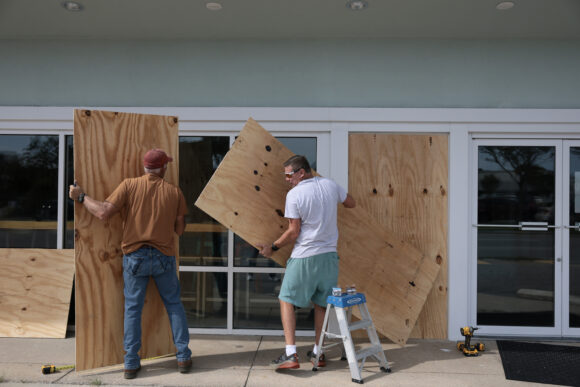
Isaias suddenly strengthened into a Category 3 hurricane as of Friday morning, Oct. 9, and remained on course to hit the Pensacola-Panhandle area of Florida with more than six feet of storm surge, strong winds and as much as 15 inches of rainfall.
“Just-received data from an Air Force Reserve Hurricane Hunter aircraft indicate that Isaias has strengthened to a major hurricane with maximum sustained winds of 120 mph (195 km/h) with higher gusts,” the National Hurricane Center said in update early Oct. 9.
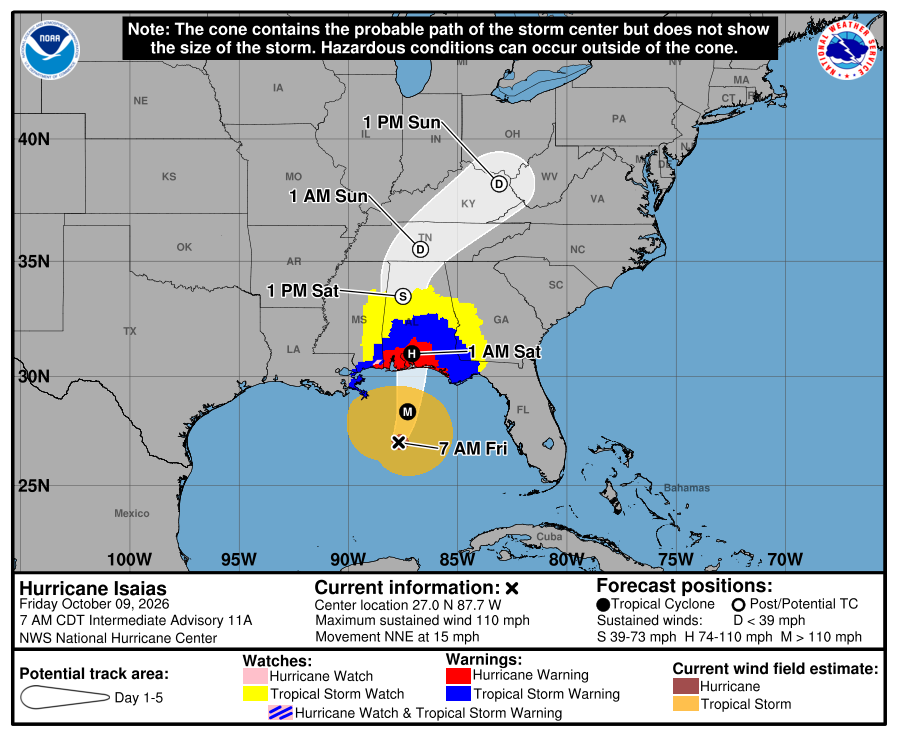
The storm, the first hurricane of the unusually quiet 2026 Atlantic hurricane season, was expected to weaken quickly as it comes ashore. It could be downgraded to a tropical stormy by the afternoon of Oct. 10 as it moves due north into Alabama, the NHC noted. But initially, Friday night could bring significant wind and flood damage to parts of the coast.
“Preparations should be rushed to completion as the weather will go downhill quickly today,” the Hurricane Center said. “While the storm is not expected to make landfall at peak intensity, it is likely that Isaias will still be a significant hurricane when it reaches the coast.”
NHC meteorologist Robbie Berg called it a “life-threatening situation,” Bloomberg reported. “Persons located within these areas should take all necessary actions to protect life and property from rising water and the potential for other dangerous conditions.”
Rain and gusting winds already were being felt early Friday morning in the Pensacola area, as homeowners and businesses worked to board up windows and fill sandbags.
The strengthening of the storm is expected to trigger insurance claims-handling firms and property insurers to prepare to deploy adjusters and claims teams to the Florida Panhandle, adjusters said.
“Mangrove Property Insurance Company has activated its catastrophe plan as Hurricane Isaias approaches,” an official with the Tampa-based insurer said in an email. “Once conditions are safe, policyholders should document damage with photographs or video, retain receipts for emergency repairs and related expenses, take reasonable steps to prevent further damage without putting themselves at risk.”
Mangrove holds about 3,900 policies in a 10-county area expected to be most affected by the storm winds, more than $1.5 billion in exposure, Florida Office of Insurance Regulation data show.
The storm system is forecast to bring flash flooding and spawn tornadoes, the Hurricane Center said. If flooding is extensive, relatively few property owners outside the Federal Emergency Management Agency’s Special Flood Hazard Area are covered by flood insurance.
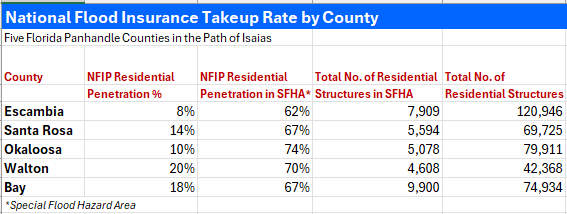
National Flood Insurance Program data show that in Escambia County, the most populated county in the Panhandle, about 8% of residential property was covered by the program, as of August. In the Special Flood Hazard Area in the county, the low-lying areas most likely to flood, however, 62% of residential structures carried the flood insurance.
“The shallow, gently sloping seafloor along the projected landfall area makes the region especially vulnerable to significant storm surge,” said Jeff Waters, director of North Atlantic hurricane models for Moody’s, the financial rating and analytics firm. “Isaias is forecast to strengthen quickly and push damaging winds well-inland before weakening. That puts communities beyond the immediate Gulf coast at risk.”
Moody’s also reported that 31,659 commercial properties, with a total estimated value of $72 billion, have a high probability of seeing winds of at least 50mph during the storm. Of those properties, almost 15,000 are multi-family residential buildings valued at $40 billion.
Top photo: On Thursday, men boarded up windows at a restaurant in Gulf Breeze, Florida, just south of Pensacola. Photographer: Joe Raedle/Getty Images/Bloomberg
Topics Catastrophe Carriers Natural Disasters Property Hurricane
Was this article valuable?
Here are more articles you may enjoy.
 McDonald’s Hit With Class Action Alleging AI-Powered Menu Price-Fixing
  McKinsey Rebukes Partner Who Questioned Challenges Facing Women CEOs
  Florida Commissioner Suspends A-Cap’s Atlantic Coast Life Over Surplus Issues
  Sedgwick: Property Claims Face Delays, Are Growing More Complex